
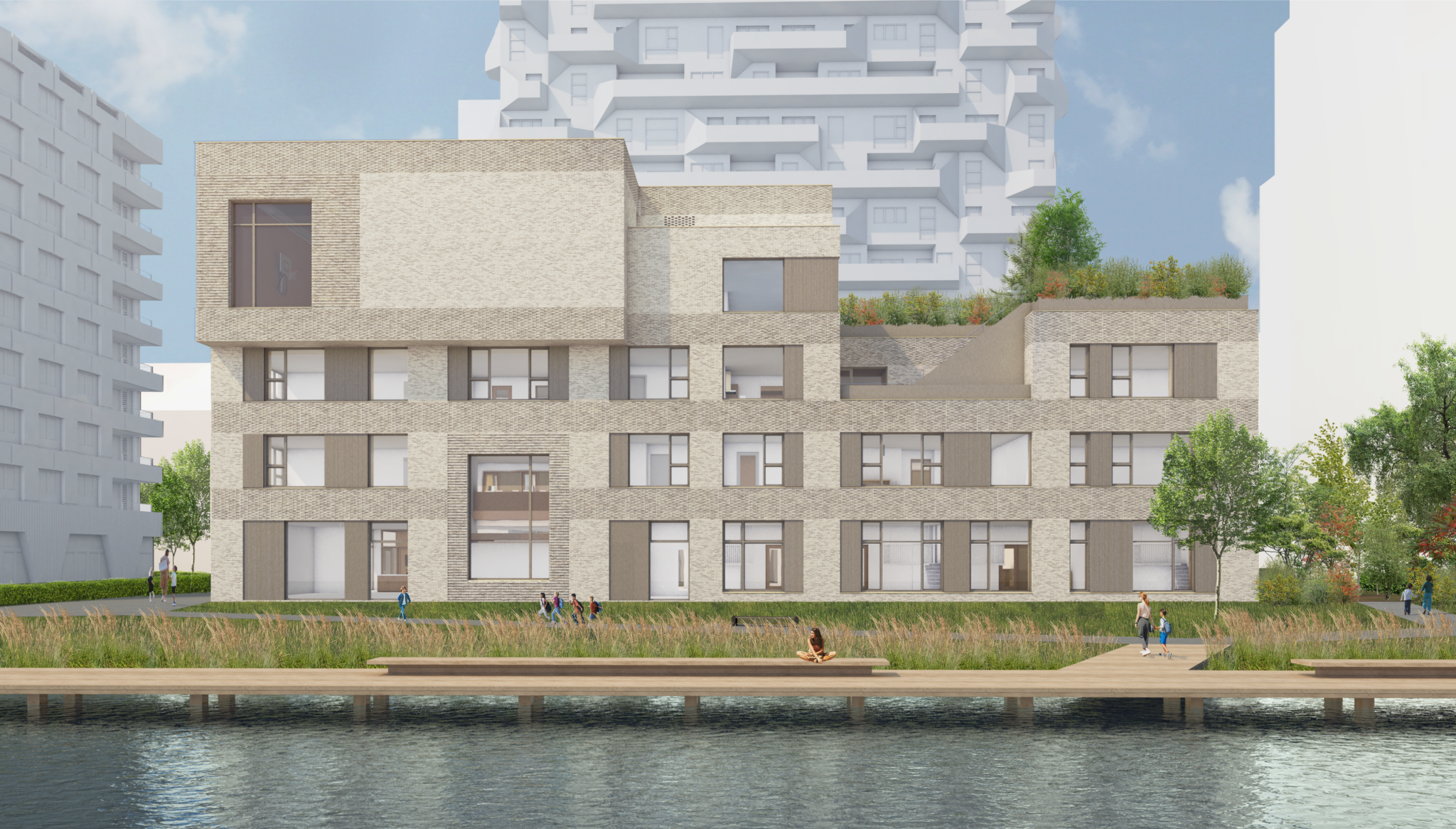
Kindercampus Zuidas
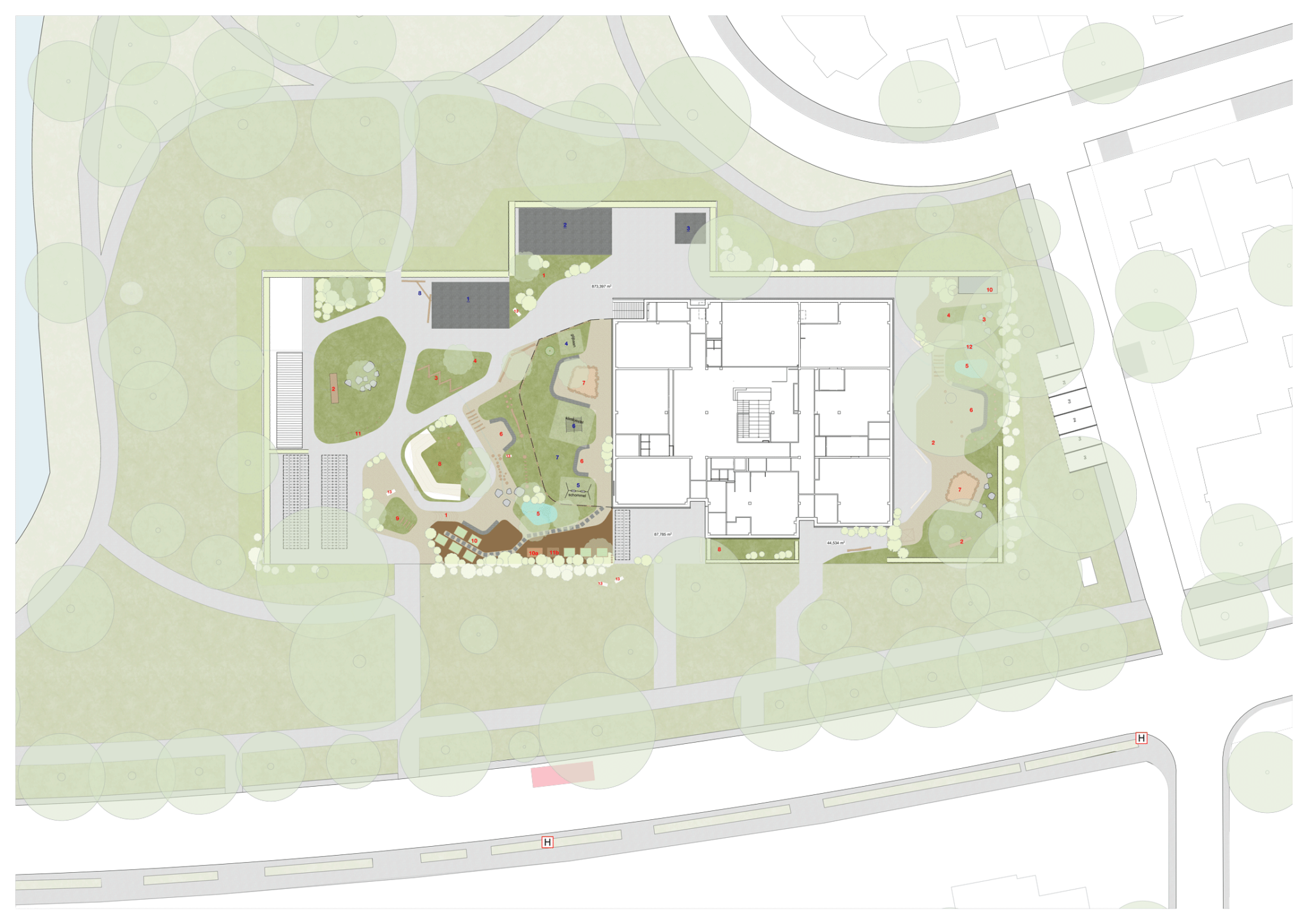
Over the next 10–15 years, the Ravel neighborhood will be developed with 1,350 homes, offices, and amenities. At its heart, the Kindercampus Zuidas will be located on a traffic-calmed square along the Boelegracht, surrounded by a green, car-free public space. The environment is designed to spark curiosity and exploration, with an educational philosophy based on the OGO (development-oriented learning) concept.
The school comprises 2,830 m² for 520 pupils, a 552 m² gymnasium, and a 410 m² after-school care facility.
Interaction and Creativity
The campus actively responds to its surroundings. An inviting entrance connects the school to the neighborhood square and childcare facilities. Separate entrances provide access to after-school programs, while the lower grades connect directly to the playground and Boelegracht. The square also offers outdoor space for the upper grades.
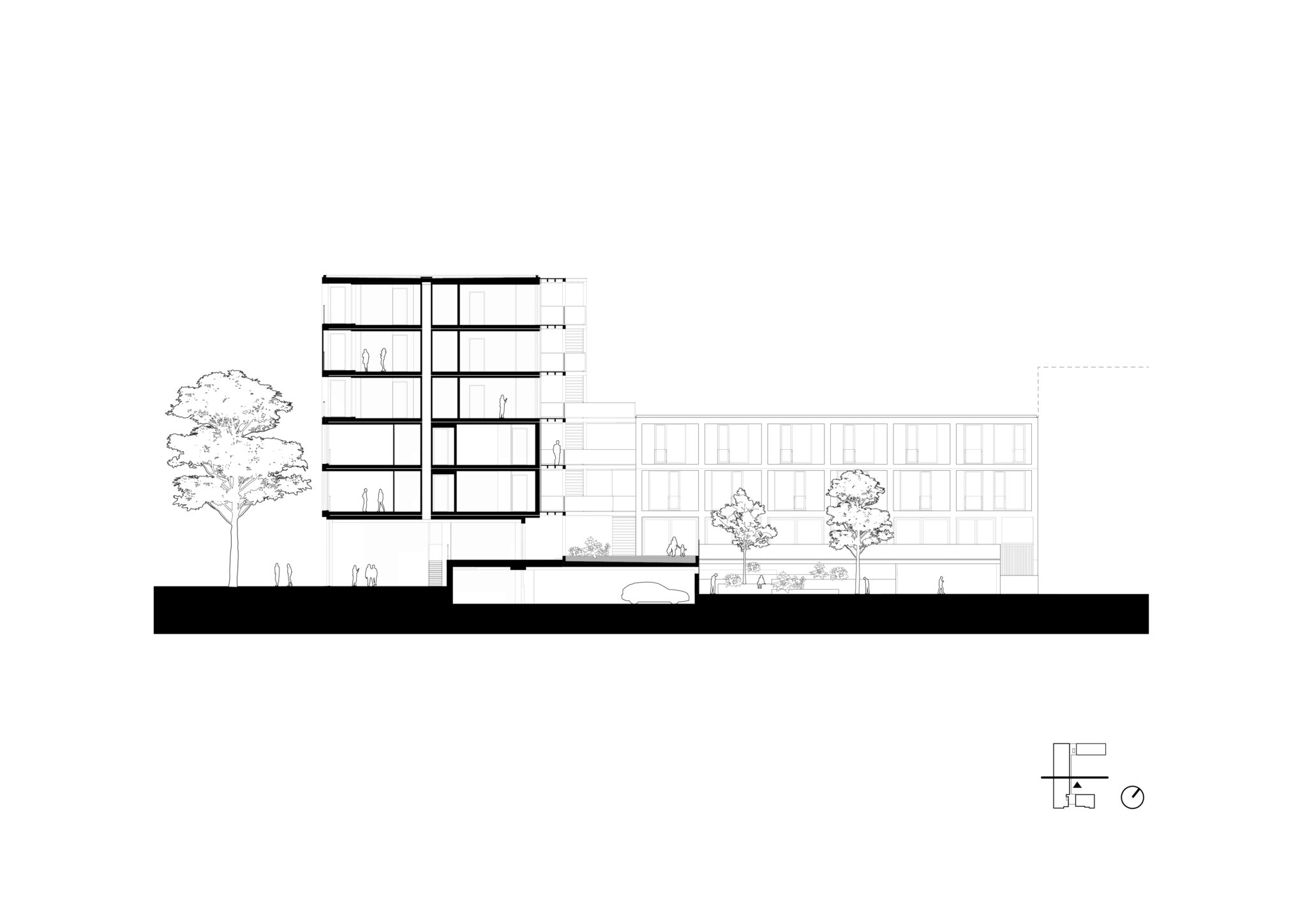
The building has a strong public presence with a multifunctional auditorium. Flexible spaces adapt to music lessons, performances, or exhibitions. Younger children are housed on the ground floor, older pupils on the first and second floors. The gym and childcare are distributed across three levels, ensuring flexibility, while an atelier on the third floor opens onto the rooftop garden.
A Building for the Future
The roofscape plays a central role in the school’s identity. From the entrance, a route leads up to the green atelier, passing terraces and stepped seating that foster encounter and interaction.
The sculptural, sand-colored brick façade is warm and playful, enriched with green roofs and terraces. Inside, light tones and natural materials are brought to life by children’s work. A column structure ensures flexibility, allowing the school to adapt to future transformations.
Outdoor spaces focus on exploratory learning: an adventurous playground, a green play area for the youngest pupils, and a rooftop terrace for gardening, outdoor classes, and nature education.
Climate-Resilient & Rainproof
The municipality’s goal of energy-neutral buildings (EPC 0.15/BENG standard) is realized here. The school’s compact, well-insulated envelope reduces energy demand, with demand-driven systems, air-source heat pumps, and PV panels on the roof.
Greenery and water are integral to livability and climate resilience. Large trees provide shade and shelter, while vegetated roofs and façades boost biodiversity and water retention. The building is designed to absorb 60 mm of rainfall per hour. The playground is landscaped with visible water channels, storing and guiding rainwater through the green schoolyard and along the façade.